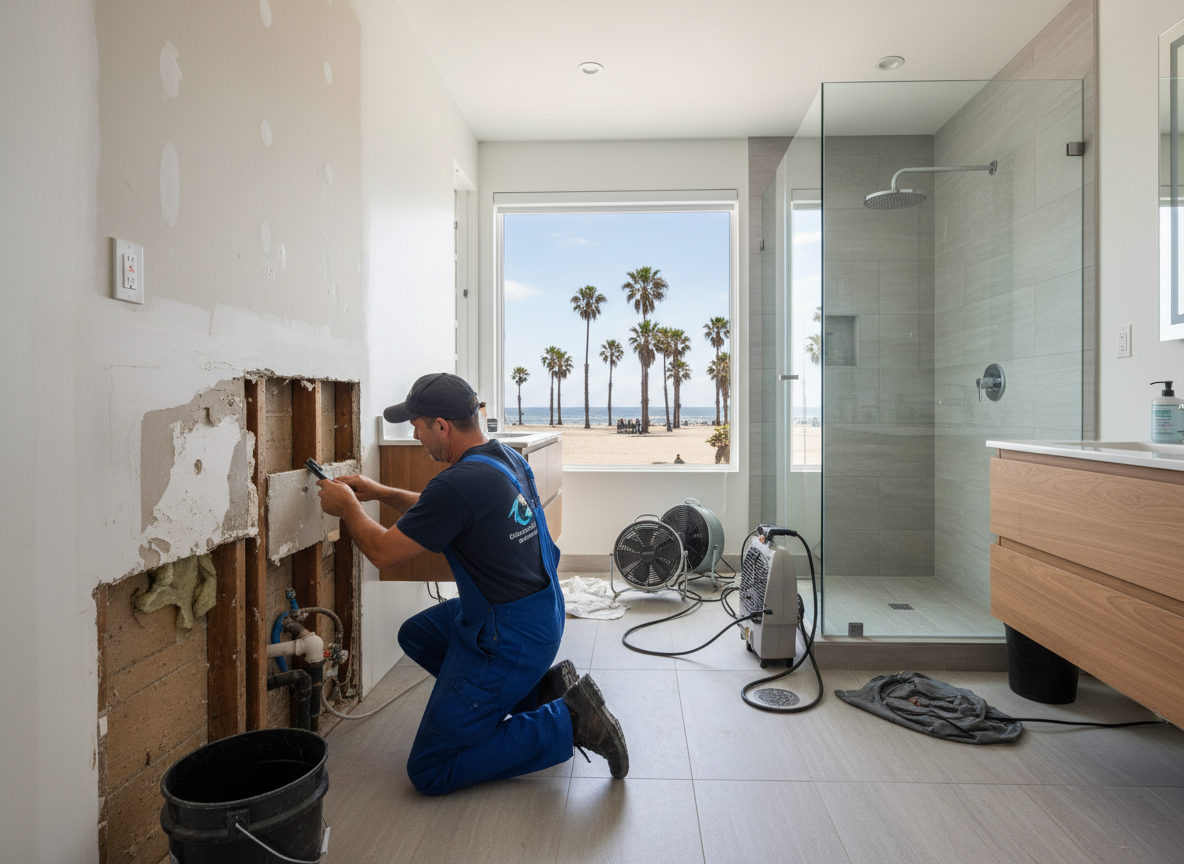
Santa Monica bathrooms in neighborhoods like Ocean Park and Wilshire-Montana often sit in homes built between the 1940s and 1970s where galvanized supply lines and cast-iron drains have reached the end of their service life. Salt-laden air from Santa Monica State Beach accelerates corrosion at joints, and the mild Mediterranean climate keeps indoor humidity high enough that small leaks behind tile can stay wet for months before visible signs appear. When water migrates into the subfloor or wall cavities, the repair must include moisture mapping with meters, selective demolition to the nearest sound substrate, and drying protocols that meet Los Angeles County ventilation standards before new finishes go in.
Palisades Park and Mid-City properties frequently have slab-on-grade construction with limited access to supply lines, so leak location often requires wall or floor removal rather than simple fixture replacement. After extraction, we treat affected framing with borate solutions to inhibit mold in the persistent coastal moisture, then reinstall tile or solid-surface surrounds using cement board backers rated for wet areas. Homeowners in Sunset Park and Pico sometimes discover damage only after a neighbor reports a shared-wall issue, which is why we always check adjacent units when the bathroom shares a plumbing wall.
Repair sequencing matters because Santa Monica inspections require proof of proper slope on shower pans and updated shut-off valves before final sign-off. We coordinate with the city when work crosses into structural or electrical scopes, and we leave access panels at every new connection so future leaks can be addressed without tearing out finished surfaces again.
Technician insight
In Santa Monica, the thing that catches most people out with Water Damage Bathroom Repair is hidden moisture trapped behind original plaster or stucco in North of Montana and Ocean Park homes where the 1950s copper lines have pinhole leaks that travel along the slab edge before anyone notices a soft floor.
Ocean Park Shared-Wall Leak
A homeowner in Ocean Park noticed discoloration on the shower wall shared with the neighboring unit. Inspection revealed a corroded supply elbow from the 1960s that had been leaking into the stud bay for months. We isolated the line, extracted water from both sides, replaced the run with PEX, treated the framing, and rebuilt the wall with new tile so the repair matched the rest of the bathroom.
How it works
- 1
On-Site Assessment
We arrive 24/7, map moisture with calibrated meters, and identify the leak source while protecting unaffected areas.
- 2
Water Extraction and Containment
Standing water is removed and the affected zone is isolated to prevent migration into adjoining rooms or units.
- 3
Drying and Mold Mitigation
Industrial air movers and dehumidifiers run until readings meet industry dry standards; borate treatment follows on exposed wood.
- 4
Repair and Finish Restoration
Damaged piping or fixtures are replaced, new waterproofing is installed, and tile or surrounds are rebuilt to match existing finishes.
- 5
Final Walk-Through and Documentation
We verify all moisture readings, review work with the owner, and supply photos for insurance or resale records.
Pricing
Upfront written estimates after inspection; final cost depends on extent of hidden damage and access constraints typical in Santa Monica's older homes.